
Imaging Center

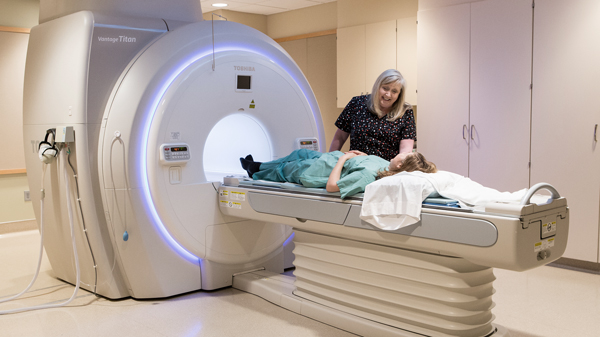
The Oregon clinic offers four imaging modalities—MRI, CT, ultrasound, and X-ray—with highly trained team of specialized radiologists and staff.
- ABOUT US
- OUR TEAM
- CONDITIONS & RESOURCES
- OUR LOCATIONS
When you or your family members have an illness or injury that requires medical imaging, we know that you want answers. The Oregon Clinic has partnered with a team of board-certified radiologists who also interpret for many large, local hospitals. They consult with your provider and other specialists to help get you an answer.
Highest Quality
Our high-resolution images are interpreted by board-certified radiologists. Our imaging center is accredited by the American College of Radiology (ACR).
Ease of Scheduling
Our office schedules directly with you, and we are often able to provide same or next day services depending on your individual insurance and the type of imaging study that is being ordered.
Cost Effective
Our services are at least 25% less expensive, on average, compared to area hospitals.
Fast Results
Results are typically sent to your provider by the next business day.
Easy Access
Our imaging center is located next to the Gateway Transit Center at I-84 and 205. We are just inside the 1st floor entrance by our convenient free parking lot.
Highly Rated Patient Experience
98% of our patients rate us highly and would refer us to family and friends. Our team takes extra care to explain procedures thoroughly and offer support and kindness. We customarily run on time and patients report a quicker in/out experience than in a hospital. We even provide warm blankets and comfortable scrubs to patients!
Health Professionals
Use this form to order imaging tests.
- Fill out all sections completely by hand or digitally.
- Print form and have ordering clinician sign order.
- FAX order to Imaging at 503-963-2982.
- If study is needed same day, or is urgent, please call our office at 503-963-2990 for scheduling assistance after faxing orders.
Neuroradiology




Body Imaging





Women’s Imaging







Musculoskeletal

Vascular/IR Imaging



 PROCEDURES, SERVICES & TREATMENTS
- CT scan
- MRI
- Ultrasound
- X-ray
 Health Resources

 Imaging Center Order Form